
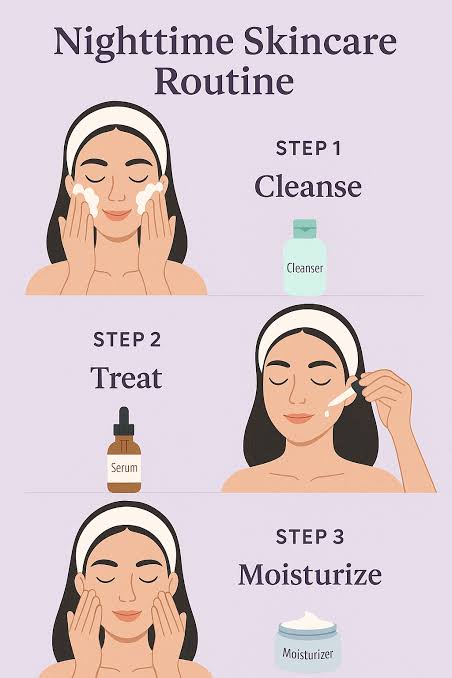
A nighttime skincare routine is one of the most important habits for maintaining healthy, hydrated, and youthful-looking skin. While you sleep, your skin naturally repairs damage caused by pollution, UV rays, makeup, and daily stress. Following a consistent evening skincare routine helps support this natural repair process, strengthens your skin barrier, and leaves your complexion fresh and glowing. Whether you have oily, dry, combination, or sensitive skin, the right nighttime routine can make a noticeable difference over time.
Table of Contents
ToggleWhy Is a Nighttime Skincare Routine Important?
Your skin becomes more active at night, repairing damaged cells and restoring moisture. A proper nighttime skincare routine offers several benefits, including:
- Removes dirt, oil, and impurities
- Washes away sunscreen and makeup
- Hydrates the skin overnight
- Supports natural skin repair
- Helps reduce clogged pores
- Improves overall skin texture
- Minimizes early signs of aging
Skipping your nighttime routine can leave bacteria, excess oil, and pollutants on your skin, increasing the risk of breakouts and irritation.
Step 1 – Remove Makeup
If you wear makeup, always remove it before cleansing your face. Sleeping with makeup can:
- Clog pores
- Cause acne breakouts
- Increase skin irritation
- Prevent your skin from renewing properly
Use micellar water, cleansing balm, or an oil cleanser to gently dissolve makeup without damaging your skin.
Step 2 – Cleanse Your Face
After removing makeup, wash your face with a gentle cleanser suitable for your skin type. Cleansing removes:
- Dirt
- Excess oil
- Sweat
- Pollution
- Remaining makeup residue
Choose a cleanser that cleans effectively without stripping away your skin’s natural moisture.
Step 3 – Apply a Toner
A toner helps prepare your skin to absorb serums and moisturizers more effectively. Look for toners containing ingredients such as:
- Niacinamide
- Aloe Vera
- Rose Water
- Green Tea Extract
- Hyaluronic Acid
These ingredients help hydrate, soothe, and balance the skin.
Step 4 – Use a Treatment Serum
Serums contain concentrated ingredients that target specific skin concerns.
Vitamin C
Brightens dull skin and improves overall radiance.
Niacinamide
Balances oil production, minimizes pores, and improves skin texture.
Retinol
Supports skin renewal and helps reduce fine lines and wrinkles.
Hyaluronic Acid
Provides deep hydration and keeps skin soft and plump.
Step 5 – Apply Eye Cream (Optional)
Although optional, eye creams can help:
- Hydrate the delicate eye area
- Reduce puffiness
- Improve the appearance of fine lines
- Refresh tired-looking eyes
Apply gently using your ring finger to avoid unnecessary pressure.
Step 6 – Moisturize Your Skin
Moisturizer locks in hydration and strengthens the skin barrier while you sleep.
For Oily Skin
Choose lightweight gel-based moisturizers.
For Dry Skin
Use rich creams containing ceramides and nourishing ingredients.
For Combination Skin
Select balanced moisturizers that hydrate without feeling greasy.
Weekly Treatments to Include
Adding weekly treatments can further improve your skincare routine.
Exfoliation
Removes dead skin cells and promotes smoother, brighter skin.
Hydrating Face Masks
Restore moisture and refresh dehydrated skin.
Clay Masks
Absorb excess oil and deeply cleanse clogged pores.
Best Ingredients for Nighttime Skincare
These ingredients work especially well overnight:
- Ceramides – Strengthen the skin barrier
- Peptides – Improve skin firmness and elasticity
- Hyaluronic Acid – Deeply hydrates the skin
- Retinol – Encourages skin renewal and reduces aging signs
- Niacinamide – Controls oil production and calms irritation
Common Nighttime Skincare Mistakes
Avoid these common mistakes:
- Sleeping with makeup on
- Using too many active ingredients together
- Skipping moisturizer
- Over-exfoliating
- Following an inconsistent routine
Healthy Habits That Improve Your Skin Overnight
Healthy lifestyle habits can enhance your skincare results.
- Drink plenty of water
- Sleep for 7–9 hours each night
- Change pillowcases regularly
- Clean makeup brushes frequently
- Manage stress levels
- Eat fruits and vegetables rich in vitamins and antioxidants
How to Customize Your Nighttime Skincare Routine
For Oily Skin
Focus on lightweight hydration and oil-controlling ingredients.
For Dry Skin
Use nourishing creams and barrier-repair products.
For Sensitive Skin
Choose fragrance-free products and avoid excessive exfoliation.
For Acne-Prone Skin
Use salicylic acid, niacinamide, or dermatologist-recommended acne treatments.
Additional Tips for Better Nighttime Skincare
- Apply products from thinnest to thickest consistency.
- Give each product 30–60 seconds to absorb.
- Avoid touching your face with dirty hands.
- Stay consistent for long-term results.
- Always patch-test new skincare products.
Frequently Asked Questions (FAQs)
1. What is the correct nighttime skincare routine?
A basic nighttime skincare routine includes makeup removal, cleansing, toner, serum, moisturizer, and optional eye cream or weekly treatments.
2. Is moisturizer necessary at night?
Yes. Moisturizer helps repair the skin barrier and locks in hydration while you sleep.
3. Can I use retinol every night?
Start by using retinol two or three nights per week, then gradually increase frequency as your skin adapts.
4. Should I exfoliate every day?
No. Most skin types only need exfoliation one or two times per week.
5. How long does it take to see skincare results?
Most people begin noticing visible improvements after four to eight weeks of consistent skincare.
Conclusion
A well-planned nighttime skincare routine is one of the best investments you can make for healthier, smoother, and more radiant skin. By removing makeup, cleansing thoroughly, applying targeted treatments, and moisturizing consistently, you support your skin’s natural overnight repair process. Combined with healthy lifestyle habits and the right products for your skin type, a consistent nighttime routine can deliver long-lasting improvements and help you wake up with refreshed, glowing skin every day.