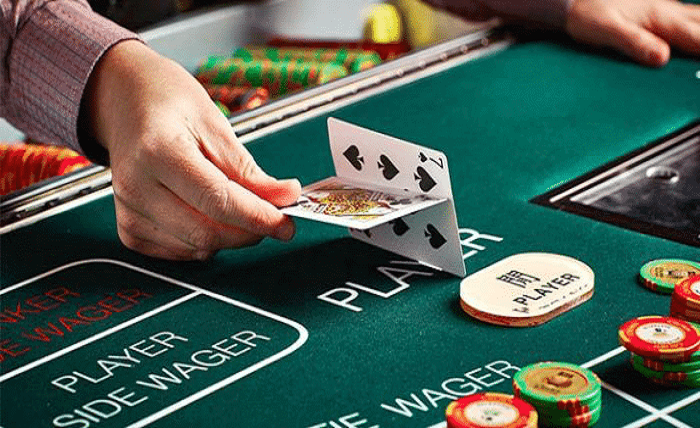
In the glittering world of casino games, few hold the mystique and allure of baccarat. Whispered about in James Bond films and played in hushed, high-limit rooms, it exudes an aura of sophistication and high stakes. Yet, beneath the polished veneer lies a game of remarkable simplicity and some of the best odds the casino floor has to offer. To bet on baccarat is to engage with a centuries-old pastime that balances chance with a sliver of strategic insight. Whether you’re a curious newcomer or a player looking to deepen your understanding, this comprehensive guide will walk you through everything you need to know about placing intelligent wagers in this captivating game.
1. A Brief History: From Italian Nobility to Global Casinos
To truly appreciate แทงบาคาร่า , one must delve into its rich history. The game’s origins are traced back to 15th-century Italy, derived from the Italian word “baccara,” meaning zero—a reference to the value of face cards and tens. It migrated to France, where it became a favorite of the aristocracy, evolving into “Chemin de Fer” and “Baccarat Banque.” These European versions involved players taking turns as the banker and added layers of ritual and decision-making.
In the mid-20th century, baccarat crossed the Atlantic to Cuba and later found its perfect home in Las Vegas. To streamline the game for the American market, casinos introduced “Punto Banco”—the version now dominant in the United States, Macau, the UK, Australia, and online casinos worldwide. Punto Banco is purely a game of chance; the player’s only decision is where to place their bet. This simplification, coupled with its association with high rollers and cinematic glamour, solidified baccarat’s status as the ultimate high-class casino game. Today, it drives the lion’s share of casino revenue in Macau and is a staple for both high-stakes and casual players globally.
2. Baccarat Demystified: The Simple Rules of Play
The intimidating reputation of baccarat is entirely undeserved when you examine the rules. The core objective is straightforward: bet on which of two hands—the “Player” (Punto) or the “Banker” (Banco)—will have a total closest to 9. A third bet, a “Tie,” is also available but is generally considered a sucker’s wager.
Card Values:
- Cards 2-9 are worth their face value.
- 10s, Jacks, Queens, and Kings are worth 0.
- Aces are worth 1.
If a hand’s total exceeds 9, only the second digit of the total counts. For example, a 7 and an 8 total 15, but the hand value is 5.
The Flow of a Round:
- Bets are Placed: You place your chip(s) on the Player, Banker, or Tie area on the table.
- Cards are Dealt: The dealer gives two cards each, face up, to the Player and Banker boxes.
- The “Natural” Win: If either hand is dealt a total of 8 or 9 (a “natural”), that hand wins immediately. If both have naturals, the higher natural wins; if equal, it’s a Tie.
- The Drawing Rules: If no natural occurs, a rigid set of “tableau” rules dictates whether a third card is drawn for either hand. Crucially, the player does not make this decision; the rules are automatic.
- Player Rule: If the Player’s hand is 0-5, they draw a third card. If it’s 6 or 7, they stand.
- Banker Rule: The Banker’s action depends on their own total and the Player’s possible third card. It’s more complex, but you don’t need to memorize it—the dealer handles it.
Once all cards are dealt according to these fixed rules, the hand closest to 9 wins. Winning Player bets are paid 1:1. Winning Banker bets are also paid 1:1, but a 5% commission is charged on the win, reflecting its statistical advantage. A winning Tie bet typically pays 8:1 or 9:1.
3. The Three Bets: Analyzing the House Edge
Your choice of wager is the only strategic decision in Punto Banco, and it’s a critical one. Understanding the house edge for each option is the foundation of smart play.
- Betting on the Banker: This is the most powerful bet on the table. Statistically, the Banker hand wins slightly more often than the Player hand (about 45.86% of the time, versus 44.62% for Player). After accounting for the 5% commission on wins, the house edge for the Banker bet is a mere 1.06%. This is one of the lowest edges in the entire casino, comparable to the best blackjack games and better than virtually every slot machine or roulette bet.
- Betting on the Player: While it wins less frequently, the Player bet pays even money with no commission. This gives it a house edge of 1.24%—still exceptionally low. From a purely mathematical standpoint, the Banker has a slight edge, but the Player bet is a strong alternative.
- Betting on the Tie: This is where casinos make their money on baccarat. The Tie bet may offer a tantalizing 8:1 or 9:1 payout, but the odds of it occurring are very low (about 9.52% of the time for an 8:1 payout). The house edge skyrockets to 14.36% (for 8:1) or 4.85% (for 9:1). Consistently betting on the Tie is a fast track to depleting your bankroll.
The Verdict: For the serious gambler looking to maximize their odds, the Banker bet is the clear mathematical choice. The Player bet is a respectable second. The Tie bet should be avoided entirely or treated as a rare, fun side bet with no expectation of profit.
4. Popular Betting Systems: Do They Work?
The allure of “beating the game” has led many to apply betting systems to baccarat. It’s vital to understand that no system can overcome the inherent house edge in the long run, as each hand is an independent event. However, systems can help structure your play and manage your bankroll.
- The Martingale: The most famous system. You double your bet after every loss, so that the first win recovers all previous losses and yields a profit equal to your original stake. The Problem: A long losing streak can quickly exceed your bankroll or the table limit, leading to a catastrophic loss.
- The Paroli (Reverse Martingale): A positive progression system. You double your bet after each win, aiming to capitalize on hot streaks while limiting losses during cold ones. It’s less risky than the Martingale but still doesn’t change the underlying odds.
- The 1-3-2-6 System: This system aims to lock in profits during a winning streak of four consecutive wins. You bet in a sequence: 1 unit, 3 units, 2 units, 6 units. If you win all four, you profit 12 units. After any loss, you restart. It’s a structured way to chase winning runs without infinite escalation.
- Flat Betting: The most disciplined approach. You bet the same amount (e.g., one unit) on every hand, regardless of outcomes. This minimizes variance, stretches your playing time, and ensures you aren’t fooled by the gambler’s fallacy.
Bottom Line: Treat betting systems as a framework for money management, not a magic key. They can make your session more entertaining and structured, but they cannot turn a negative-expectation game into a positive one.
5. Baccarat in the Digital Age: Live Dealer vs. RNG
The experience of betting on baccarat has been transformed by online and mobile platforms. You now have two primary choices:
- RNG (Random Number Generator) Baccarat: This is a fully digital version. Software algorithms determine the outcome. It’s fast, always available, and perfect for practicing or playing low-stakes games. The house edge remains identical to the live game.
- Live Dealer Baccarat: This bridges the gap between online and physical casinos. A real human dealer streams from a studio or real casino floor, dealing real cards on a real table. You place bets via a digital interface. This format captures the social aspect, ritual, and authenticity of baccarat, making it immensely popular. You can often choose from different table limits, side bets, and camera angles.
Choosing Your Platform: For pure strategy and speed, RNG is excellent. For the full, immersive baccarat experience from your home, Live Dealer is unparalleled. Always choose licensed, reputable online casinos that use audited RNG software and professional live dealer studios.
6. Etiquette and Atmosphere: Playing Like a Pro
While online play is relaxed, visiting a physical baccarat table (often called the “big player” or “baccarat pit”) comes with its own etiquette.
- Dress Code: While most casino floors are casual, high-limit baccarat rooms may have a smart-casual or formal dress code.
- Handling Chips: Place your bets clearly in the designated area on the table layout before the dealer calls “no more bets.”
- Touching the Cards: In “squeeze” games (common in high-limit rooms), players may be allowed to slowly reveal their cards, bending them to build suspense. Only do this if you are the designated player for that hand. In most mass tables, the dealer handles all cards.
- Tipping: It is customary to tip the dealer (place a bet for them) after a winning streak. You can simply place an additional chip on your bet and say, “For the dealer.”
- Conversation: Keep it respectful and low-key. The game has a dignified pace; avoid loud celebrations or complaints.
7. Advanced Considerations: Side Bets and Scoreboards
Once you’re comfortable with the main bets, you’ll encounter additional elements.
- Side Bets: These are optional wagers with high payouts and even higher house edges. Examples include “Player Pair” or “Banker Pair” (betting that the first two cards in a hand will be a pair), or “Dragon Bonus” (betting on the margin of victory). Treat these as lottery-style bets for occasional fun, not a core strategy.
- The Scoreboard (Bead Plate): Baccarat tables display the history of previous hands (P for Player, B for Banker, T for Tie). Many players look for patterns (“It’s a Banker streak!” or “It’s due for a Player!”). It’s critical to remember that each hand is independent. The scoreboard is entertainment, not a predictive tool. However, tracking commissions owed on Banker wins if you’re playing multiple shoes can be a practical use.
Conclusion
To bet on baccarat intelligently is to embrace a game of elegant simplicity underpinned by compelling mathematics. It requires no complex skill, yet offers some of the most favorable odds in the house to the disciplined player. The strategic essence lies not in card counting or bluffing, but in the steadfast choice to wager on the Banker, avoid the seductive Tie, manage your bankroll with discipline, and enjoy the timeless ritual of the game. Whether you’re drawn by the glamour of Monte Carlo, the high-energy pits of Macau, or the convenience of a live dealer stream on your laptop, baccarat offers a uniquely sophisticated and potentially rewarding gaming experience. Remember to play responsibly, view the game as entertainment first, and let the cards fall where they may.
FAQs: Bet on Baccarat
- Is baccarat a game of skill or pure luck?
In the dominant Punto Banco version, it is overwhelmingly a game of luck. The drawing rules are fixed and automatic. The only “skill” lies in making the mathematically optimal bet (Banker or Player) and managing your money wisely. Other variants like Chemin de Fer involve more player choice and skill. - Why is there a commission on the Banker bet?
The Banker bet has a higher probability of winning than the Player bet. The 5% commission is how the casino maintains its house edge on this advantageous wager. Without it, the player would have an edge over the house. - Can card counting work in baccarat? Unlike blackjack, card counting is extremely difficult and offers minimal advantage in baccarat. Because multiple cards are removed from play each round and the shoe is often deep (8 decks), the effect of removed cards on future outcomes is negligible. It’s not a viable strategy for the average player.
- What is the minimum bet for baccarat? This varies wildly. On the main casino floor, minimums can be as low as $10-$25. In dedicated high-limit baccarat salons, minimums often start at $100 and can go into the thousands. Online, you can find RNG tables with minimums of $1 and live dealer tables starting at $5-$10.
- What’s the best advice for a complete beginner?
- Learn the basic rules and card values.
- Stick to betting on the Banker. It’s the simplest and statistically best strategy.
- Set a loss limit and a win goal before you play, and walk away when you hit either.
- Play free online baccarat games first to get comfortable with the flow without risking money.
- Ignore the Tie bet and don’t chase patterns on the scoreboard. Enjoy the game for its pace and elegance.